The Best Maintenance Routine for a Healthy Koi Pond (Weekly, Monthly, Seasonal)
Kelly CookeThe Best Maintenance Routine for a Healthy Koi Pond (Weekly, Monthly, Seasonal)
Ask ten koi keepers how they maintain their ponds and you will get ten different answers — some involving hours of labor every weekend, others involving a casual glance now and then and a hope for the best. The truth is that effective koi pond maintenance does not require either extreme. What it requires is consistency, the right products, and a structured routine that covers the basics without consuming your free time.
This guide lays out a complete maintenance framework organized by weekly, monthly, and seasonal tasks. Follow it, and you will spend roughly 15 minutes a week keeping your pond in excellent condition — with the occasional deeper session when the seasons change. The goal is not to make maintenance harder. It is to make it so organized and efficient that your pond practically runs itself.
The Weekly Routine: 15 Minutes That Make All the Difference
Your weekly routine is the backbone of pond health. These are the non-negotiable tasks that keep water quality stable, your koi healthy, and small problems from becoming big ones.
Test Your Water
Spend two minutes with a liquid test kit checking ammonia, nitrite, nitrate, and pH. Write the results down — even a simple notebook works. What you are looking for is consistency: ammonia and nitrite at zero, nitrate below 40 ppm, and pH between 7.0 and 8.5. Any deviation from these ranges is your early warning system. Catching a rising ammonia trend on Tuesday means you fix it before your koi show stress on Saturday.
Dose Beneficial Bacteria and Enzymes
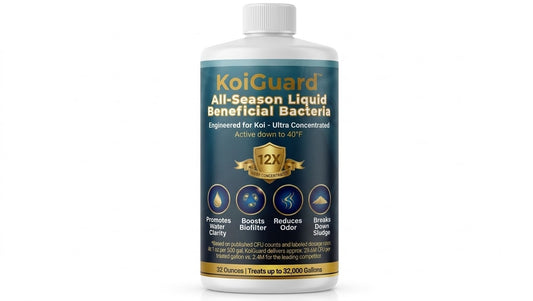
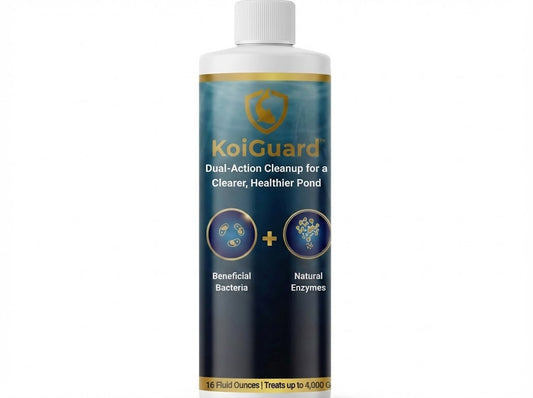
This is the single most impactful thing you can do each week. Measure your dose based on your pond volume — 4 fl oz of liquid bacteria per 1,000 gallons, or 2 scoops of dry bacteria per 1,000 gallons — mix it with a bucket of pond water, and distribute evenly around the pond. If you are also using KoiGuard Pond Enzymes, apply them at the same rate. Or simplify everything by using KoiGuard BeneZyme, which combines both in a single product.
Remember to turn off your UV sterilizer for 24 hours after applying any product that contains bacteria. This gives the beneficial strains time to attach to surfaces and begin colonizing before UV exposure can reduce their numbers.
Check Your Equipment
Take a quick walk around your system. Is the pump running at full flow? Is the waterfall flowing normally or has the flow decreased, indicating a clogged intake? Are air pumps running and producing visible bubbles? Is the skimmer basket full? A 60-second visual check catches mechanical problems before they cause water quality problems.
Skim the Surface
Remove floating debris — leaves, pollen, seeds, insects — with a hand net. Surface debris that sinks to the bottom becomes organic load that your bacteria and enzymes have to process. Removing it before it sinks reduces the biological burden on your filtration system and keeps the pond looking clean.
Observe Your Koi
This is the part most people enjoy, so think of it as the reward for doing the other tasks. Spend a few minutes watching your fish. Are they active and swimming normally? Are all fish accounted for? Is anyone sitting on the bottom, flashing against objects, clamping their fins, or showing spots, sores, or unusual marks? Early detection of health problems — whether caused by water quality, parasites, or bacterial infections — is far more effective and less costly than treating advanced illness.
The Monthly Routine: A Slightly Deeper Look
Once a month, set aside an additional 30 to 45 minutes for tasks that do not need weekly attention but should not be neglected for longer than four to six weeks.
Perform a Partial Water Change
Replace 10 to 15 percent of your pond water with fresh, dechlorinated water. This dilutes accumulated nitrates, replenishes trace minerals, and removes dissolved organic compounds that filtration alone cannot address. Always match the temperature of the replacement water as closely as possible to your pond's current temperature to avoid shocking your fish.
A partial water change is also a good time to vacuum or stir up any debris that has settled on the bottom, allowing your filtration to capture it. Some pond owners combine their monthly water change with a light bottom cleaning for efficiency.
Clean the Pump Intake and Skimmer
Remove your pump and clean the intake screen or pre-filter. Organic buildup here reduces flow rate, which reduces filtration efficiency and can stress your pump motor. If you have a skimmer, remove and rinse the basket and any filter mats. Use pond water for rinsing biological media — never tap water, which contains chlorine that kills beneficial bacteria.
Check Your UV Bulb
UV clarifiers are effective at controlling green water (suspended algae), but UV bulbs lose intensity over time. Most manufacturers recommend replacing UV bulbs annually, but it is worth checking monthly that the bulb is illuminated and the quartz sleeve is clean. A UV unit with a dim or dirty bulb is consuming electricity without providing much benefit.
Inspect Plumbing and Connections
Walk the full plumbing run from pump to filter to returns. Look for drips, leaks, loose fittings, and any sign of wear or damage. Small leaks can waste significant water over time, and a plumbing failure during a hot weekend when you are away from home can be catastrophic. Tighten connections, replace worn O-rings, and address any issues before they escalate.
Review Your Feeding Amounts
As temperatures change month to month, so should your feeding quantities. Use your monthly check-in to consciously adjust how much you are feeding based on current water temperature and your koi's apparent appetite. Overfeeding is one of the leading causes of water quality decline, and a monthly reset helps prevent the gradual creep toward too much food.
The Seasonal Framework: Adjusting for Spring, Summer, Fall, and Winter
Your weekly and monthly routines provide the foundation, but each season brings unique demands that require adjustments to your approach. Here is what changes throughout the year.
Spring: The Startup Season
Spring is the most critical time of year for koi pond maintenance. As water temperatures climb above 50 degrees Fahrenheit, your koi's immune systems are still suppressed while pathogens are becoming active. Your biological filter is essentially starting from scratch after winter dormancy. This mismatch is why spring is when most koi health problems occur.
Spring startup tasks:
- Clean the pond: Remove accumulated debris from winter — leaves, sludge, and any organic matter that settled on the bottom. A thorough spring cleaning gives your system a fresh start.
- Inspect and restart equipment: Check pumps, filters, UV units, and air pumps. Replace UV bulbs if they have been in service for a year. Clean or replace mechanical filter media as needed.
- Begin bacteria dosing at the loading dose: Apply KoiGuard Beneficial Bacteria at the Day 1 rate — 8 fl oz per 1,000 gallons (liquid) or 4 scoops per 1,000 gallons (dry) — to jumpstart your biological filtration. Follow with weekly maintenance doses.
- Start enzymes early: Enzymes help break down the organic debris that accumulated over winter. Begin dosing KoiGuard Pond Enzymes at the loading rate alongside your bacteria for the first few weeks of spring.
- Test water frequently: Test every few days during the first weeks of spring. Ammonia and nitrite spikes are common as the nitrogen cycle re-establishes. Catching them early allows you to respond with water changes and additional bacteria before your koi are affected.
- Resume feeding gradually: Begin with small amounts of easily digestible food once water temperatures are consistently above 55 degrees. Increase gradually as temperatures rise.
Summer: Peak Performance Season
Summer is when your pond is at full capacity — maximum feeding, maximum waste production, maximum biological activity. It is also when things can go wrong quickly if your routine slips.
Summer priorities:
- Maintain consistent dosing: Do not skip your weekly bacteria and enzyme doses. Summer's higher waste loads mean your biological filtration is working harder than any other time of year. Consistent supplementation keeps the bacterial population strong enough to handle the load.
- Watch dissolved oxygen: Warm water holds less dissolved oxygen, and your koi, bacteria, and organic decomposition are all competing for what is available. Ensure adequate aeration — run air pumps around the clock, and consider adding an additional air stone if your pond runs warm. Watch for koi gasping at the surface, which is a sign of low oxygen.
- Feed high-quality food at appropriate levels: Summer is the peak growth season, and your koi need nutrition. Feed a high-protein food two to three times daily, but only what they can consume in five minutes. Remove uneaten food.
- Monitor for algae: Long days and warm water create ideal conditions for algae blooms. Consistent enzyme dosing helps by breaking down the organic nutrients that feed algae. If you have a UV clarifier, make sure it is running and the bulb is effective.
- Top off water levels: Evaporation increases significantly in summer. Top off your pond as needed with dechlorinated water to maintain proper volume and concentration of treatments.
Fall: Preparing for the Transition
Fall is about winding down gracefully. The decisions you make now directly affect how your koi handle winter and how smoothly spring startup goes next year.
Fall priorities:
- Manage leaves aggressively: Falling leaves are the single biggest challenge of autumn pond keeping. A leaf net over the pond prevents the majority of debris from entering the water. Leaves that reach the bottom decompose over winter, producing ammonia and hydrogen sulfide in the process. An ounce of prevention here is worth a pound of cure in spring.
- Boost enzyme dosing: As leaves and organic debris increase, consider an extra dose of KoiGuard Pond Enzymes to help break down the additional organic load before winter slows biological activity.
- Reduce feeding gradually: As water temperatures drop below 65 degrees, switch to a wheat germ-based or easily digestible food. Below 55 degrees, feed only once daily or every other day. Stop feeding entirely when water temperatures consistently fall below 50 degrees. Food that is not digested due to slowed metabolism sits in the gut and can cause health problems.
- Continue bacteria dosing until temperatures drop: Maintain your weekly bacteria dose as long as water temperatures are above 50 degrees. Your biological filter needs support right up until it enters winter dormancy.
- Perform a fall water change: A 20 to 25 percent water change in late fall removes accumulated nitrates and dissolved organics before winter, giving your pond the cleanest possible starting point for the dormant season.
- Clean filters one final time: Give your mechanical filtration a final cleaning before winter. This ensures flow remains adequate during months when you may not be checking as frequently.
Winter: Minimal Intervention, Maximum Vigilance
Winter is the quietest season for pond maintenance, but it is not a season for complete neglect. Your koi are torpid, their metabolism is minimal, but certain basic needs remain.
Winter priorities:
- Stop feeding below 50 degrees: This is non-negotiable. Koi cannot digest food at low temperatures, and feeding them in cold water causes more harm than good. They live off stored fat through winter.
- Keep aeration running: An air pump with a diffuser near the surface (not the bottom — you do not want to mix cold surface water with the slightly warmer water your koi are resting in at the bottom) maintains a small opening in ice and allows gas exchange. This prevents toxic gases from building up under ice cover.
- Do not break ice by hitting it: The shock waves from striking ice can injure or stress your koi. Use a floating de-icer or the heat from an air pump to maintain an opening.
- Minimal bacteria dosing: Below 50 degrees, bacterial activity is extremely limited. You can reduce dosing to once or twice monthly at a reduced rate, or pause entirely in very cold climates until spring. The bacteria are dormant, and dosing offers minimal benefit until water warms again.
- Check equipment periodically: Even in winter, walk past your pond every few days. Make sure the air pump is running, the gas exchange hole is open, and nothing unusual has occurred. A quick visual check takes 30 seconds and can prevent winter disasters.
Your KoiGuard Product Schedule
To make this routine as straightforward as possible, here is a consolidated product schedule that maps KoiGuard products to the seasonal framework above:
Spring (Water Above 50 Degrees, Startup Phase)
- Week 1: Bacteria at loading dose (8 fl oz or 4 scoops per 1,000 gal) + Enzymes at loading dose (8 fl oz per 1,000 gal)
- Weeks 2+: Bacteria at weekly dose (4 fl oz or 2 scoops per 1,000 gal) + Enzymes at weekly dose (4 fl oz per 1,000 gal)
Summer (Peak Season)
- Weekly: Bacteria at maintenance dose (4 fl oz or 2 scoops per 1,000 gal) + Enzymes at maintenance dose (4 fl oz per 1,000 gal)
- Or: BeneZyme at maintenance dose (4 fl oz per 1,000 gal) for a simplified single-product routine
Fall (Transition Phase)
- Weekly: Bacteria at maintenance dose + Enzymes at maintenance dose (consider an extra enzyme dose during peak leaf fall)
- Continue until water temperature drops below 50 degrees consistently
Winter (Below 50 Degrees)
- Bacteria: Minimal — once or twice monthly at reduced rate, or pause entirely
- Enzymes: Pause until spring
The "15 Minutes a Week" Promise
When people hear "maintenance routine," they often picture a full afternoon of backbreaking work. That is not what this is. Here is what your typical weekly session actually looks like:
- Test water: 2 minutes
- Dose bacteria and enzymes: 2 minutes
- Quick equipment check: 1 minute
- Skim surface debris: 3 minutes
- Observe koi: 5 minutes (arguably the best 5 minutes of your week)
That is 13 minutes. The monthly tasks add about 30 to 45 minutes once every four weeks. Seasonal transitions require a longer session or two per year. The vast majority of your pond-keeping experience is enjoyment, not labor.
Premium products are a significant part of what makes this efficiency possible. When you use KoiGuard Beneficial Bacteria that actually contains the bacterial strains and concentrations printed on the label, you do not need to double-dose, re-dose, or wonder whether it is working. When your enzymes are formulated to break down the specific organic compounds found in koi ponds, you spend less time manually removing sludge. Quality products do not add complexity to your routine — they subtract it.
To learn more about what makes KoiGuard products different, visit the Why KoiGuard page. For specific product questions, check our FAQ or use the Pond Calculator to determine exactly which products and sizes fit your pond.
The Bottom Line
A healthy koi pond is not the product of heroic interventions — it is the product of small, consistent actions performed on a reliable schedule. Test your water weekly. Dose your bacteria and enzymes without skipping weeks. Check your equipment. Watch your fish. Adjust your approach with the seasons. That is it. The framework in this guide covers every task that matters, organized so nothing falls through the cracks. Start this week, stick with it, and you will find that maintaining a beautiful, healthy koi pond takes far less time and worry than you expected.